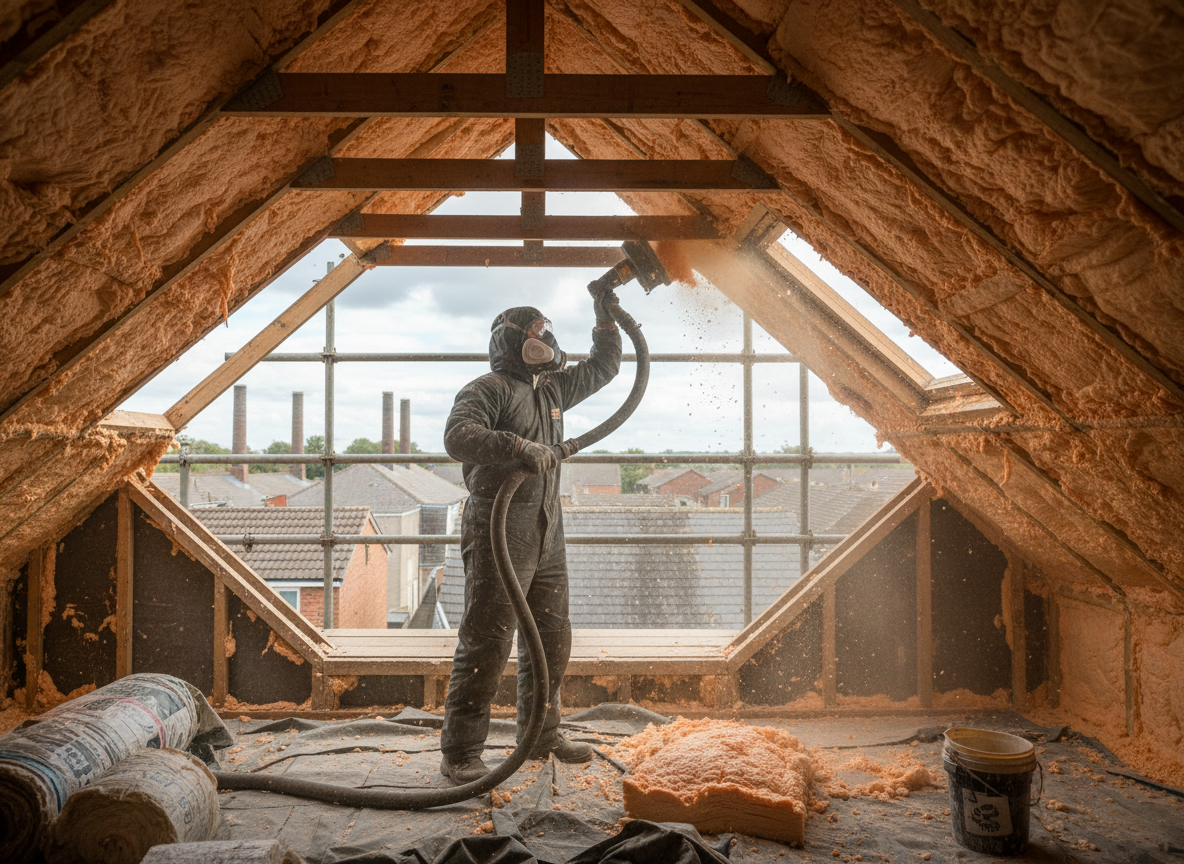
Thermal spray foam removal in Scunthorpe often involves properties built between the 1920s and 1960s in neighbourhoods such as Ashby, Crosby and Frodingham. These homes frequently have foam applied directly to solid brick or cavity walls that were never designed for it. The damp climate near the Humber means trapped moisture behind the foam can lead to timber decay and plaster failure if extraction is rushed. Proper removal requires controlled heating to soften the foam without scorching brick or releasing fibres into living spaces.
Edge cases appear regularly in Scunthorpe terraces where foam extends into lofts or under suspended floors. Older electrical wiring and gas pipes hidden behind the foam must be located before any heat is applied. North Lincolnshire building practices from earlier decades left many properties with minimal ventilation, so crews check for condensation routes that will need restoring once the foam is gone. Incomplete removal leaves residue that can off-gas when temperatures rise in summer.
Regulation notes for this work focus on safe disposal of removed material and dust containment to protect neighbouring homes in tight Scunthorpe streets. Homeowners should expect the process to expose any underlying damp proofing defects that were masked by the foam. FreshLayer Experts works from its base at Crown Buildings on Laneham Street and operates 24/7 to handle urgent cases where foam failure has already caused internal damage.
Technician insight
In Scunthorpe, the thing that catches most people out with thermal spray foam removal is how often the foam was sprayed straight onto the back of external walls in 1930s terraces around Ashby and Old Brumby, trapping moisture from the estuary winds that then rots floor joists once the foam is disturbed.
Foam Extraction in Crosby Terrace
A 1950s end-terrace in Crosby showed black mould along the party wall after heavy winter rain. Inspection revealed spray foam blocking the original air bricks. Extraction used low-temperature heating to lift the foam cleanly, followed by clearing the blocked vents. Airflow returned and the mould dried out without further internal repairs.
How it works
- 1
Initial Survey
Assess foam depth, wall construction and any hidden services in Scunthorpe properties.
- 2
Controlled Heating
Apply targeted heat to soften foam without damaging brickwork or wiring.
- 3
Mechanical Extraction
Scrape and vacuum residue while containing dust in the confined spaces common to local terraces.
- 4
Ventilation Restoration
Check and reopen airflow paths affected by the original foam installation.
Pricing
Cost depends on property age, foam thickness and access in Scunthorpe homes; upfront quotes provided after inspection.