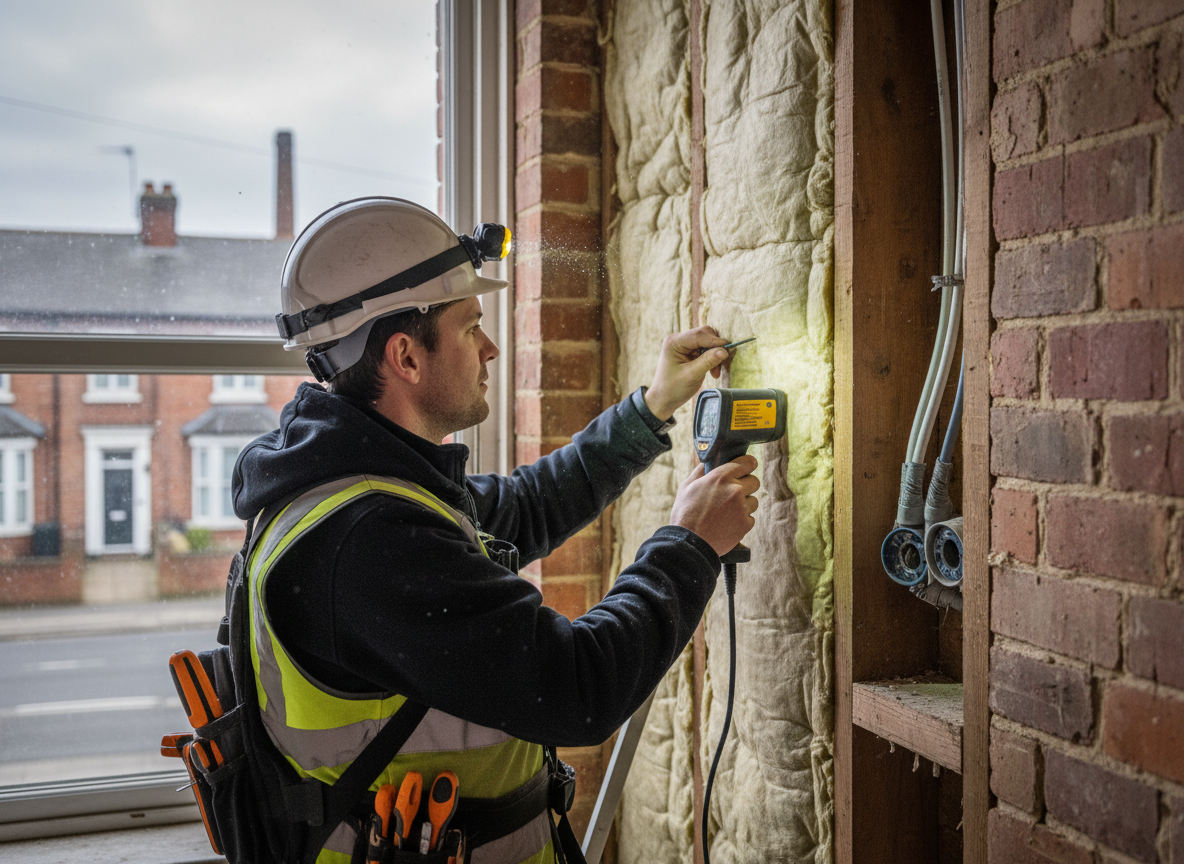
Spray foam insulation in Scunthorpe homes often fails when moisture from the region's damp winters penetrates the material, leading to hidden rot in roof timbers or wall cavities. Older terraced and semi-detached houses built around the steelworks era frequently have narrow lofts or closed cavities that trap condensation, making visual checks alone unreliable. An assessment must include moisture meter readings and borescope inspection through existing access points to map affected zones without unnecessary disturbance.
Homeowners in the Scunthorpe area sometimes mistake staining on ceilings for simple leaks when the real issue is off-gassing or shrinkage of aged spray foam installed in the 2000s. Proper assessment records the foam type, thickness, and adhesion quality, then checks for compliance gaps around chimneys and vents that local building practices left unsealed. This step prevents later removal work from exposing structural timber already compromised by years of trapped damp.
Assessment also covers the practical access realities on Scunthorpe streets where many properties back onto shared alleys or have limited loft hatches. We note any asbestos-containing materials common in pre-1980s ceilings before any disruption, and we flag properties near the River Trent floodplain where rising damp accelerates foam breakdown. These details shape the safest removal sequence and protect adjacent rooms during the job.
Technician insight
In Scunthorpe, the thing that catches most people out with insulation assessment is how many 1960s and 1970s houses around the old steelworks have spray foam applied directly over unventilated cavities that now hold years of condensation from the flat surrounding terrain.
Westcliff loft assessment
A homeowner in the Westcliff area noticed ceiling stains after heavy winter rain. We found spray foam that had pulled away from rafters, trapping moisture against the timber. Borescope checks revealed early rot in two joists. The assessment report allowed targeted removal without opening the entire roof.
How it works
- 1
Initial Site Walkthrough
We inspect all accessible roof spaces, wall cavities and external elevations at the Scunthorpe property to locate spray foam and note visible damage.
- 2
Moisture and Material Testing
Readings are taken with calibrated meters and a borescope to determine foam condition, moisture levels and any timber decay hidden behind the insulation.
- 3
Report and Recommendation
Findings are compiled into a clear written report that outlines whether removal is required and highlights any access or safety considerations specific to the building.
Pricing
Upfront quotes issued after the assessment visit, based on property size and complexity.