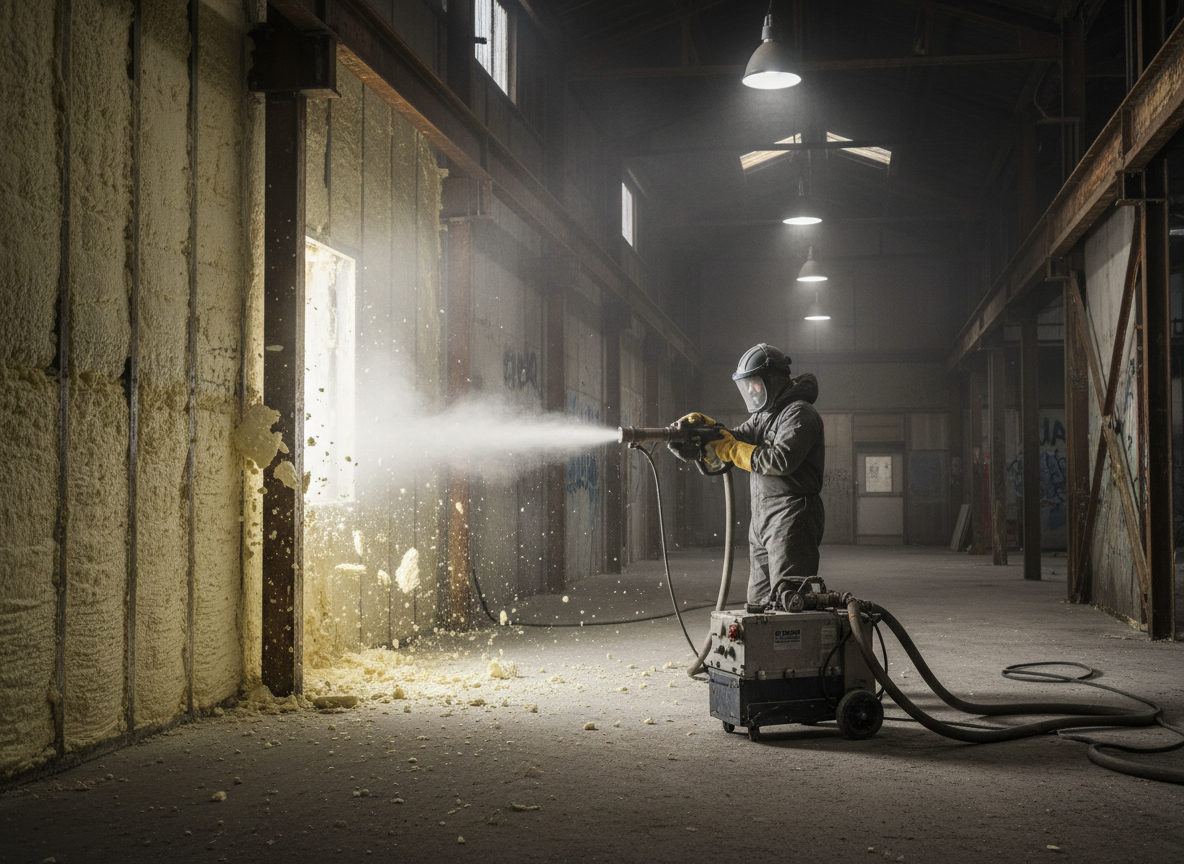
Dry ice blasting removes spray foam insulation without damaging underlying substrates in Scunthorpe homes. The process uses solid CO2 pellets accelerated at high velocity to lift foam from timber joists and brickwork common in post-war housing around Frodingham and the town centre. Older properties often have foam applied directly to unlined ceilings where moisture from North Lincolnshire winters has caused adhesion issues that require careful pellet sizing to avoid substrate erosion.
Edge cases in the Scunthorpe area include foam trapped behind electrical cabling runs and around chimney breasts in terraced stock. Operators must isolate live services first because residual moisture in the pellets can conduct if wiring is exposed. North Lincolnshire building practices from the 1960s frequently left foam bridging ventilation gaps, so crews check for hidden voids before blasting to prevent trapped residue that later affects loft airflow.
Code considerations for Scunthorpe jobs centre on safe disposal of removed foam and spent media. The method produces no secondary waste liquid, which suits properties near the River Trent corridor where drainage restrictions apply. Homeowners should expect the team to mask all surfaces and run negative-air filtration because the process creates fine dust even though the media itself sublimes.
Seasonal Timing Guidance
Winter calls increase when heating costs highlight failed foam performance in Scunthorpe lofts. Dry ice works year-round but crews schedule around rain because pellet flow drops if humidity inside the property rises above typical levels for the area.
Technician insight
In Scunthorpe, the thing that catches most people out with dry ice blasting spray foam removal is the way older terraced houses around the town centre trap foam against single-skin brick where decades of damp winters have hardened the bond. Homeowners often try scraping first and leave residue that then requires extra passes.
Loft Clearance in Crosby
Homeowner reported rising heating bills in a 1960s semi. Inspection found spray foam bridging rafters and trapping moisture. Dry ice blasting cleared the foam cleanly from timber without damaging the original roof structure. Loft ventilation was restored and heating performance improved.
How it works
- 1
Site Assessment
Inspect foam depth, substrate condition and access points in the Scunthorpe property.
- 2
Protection Setup
Mask surfaces, isolate electrics and establish containment for the work area.
- 3
Dry Ice Blasting
Apply controlled pellet stream to lift foam without harming joists or brickwork.
- 4
Clearance and Disposal
Remove loosened material, vacuum residue and confirm ventilation paths remain clear.
- 5
Final Inspection
Check for complete removal and note any substrate repairs needed before handover.
Pricing
Cost depends on foam thickness, access difficulty and property size; upfront quotes provided after inspection.